
The Body Standard Machine
The body standard is not just a description of what a healthy or attractive body looks like. It works like a product. It is revised, promoted, and sold by industries that profit from the gap between what bodies actually are and what bodies are told they should be. Every shift in the standard opens a new round of products. Every new round of products resets the dissatisfaction.
This applies to all bodies. The specifics differ. The mechanism does not.
Body standards reflect health, attractiveness, or changing cultural taste. They change as science learns more and culture moves on. Chasing the current one is a personal choice, driven by discipline, self-improvement, or wanting to look good. The industries that support that choice exist to help. The diet program, the gym membership, the serum, the supplement, the procedure, the medication. Tools for people working toward a better version of themselves.
People judged each other's bodies long before anyone sold a product for it. A body that was hard to get has always said something about the person who had it. Money, free time, discipline, youth.
The industries did not invent insecurity. They industrialized it.
What modern economies added was the profit. Whole industries now make money from the standard, and the faster it moves, the more they sell.
Industries do not always play the same part. Sometimes they follow a look that is already rising on its own. Thinness was fashionable before the diet industry grew large behind it. Sometimes they push, repeating a look in advertising until it seems normal.
And sometimes they invent the problem outright.
In 1915, an ad in Harper's Bazar, a women's fashion magazine, showed a woman in a sleeveless dress with her arms raised. It said summer dresses and modern dancing now made “necessary the removal of objectionable hair.”
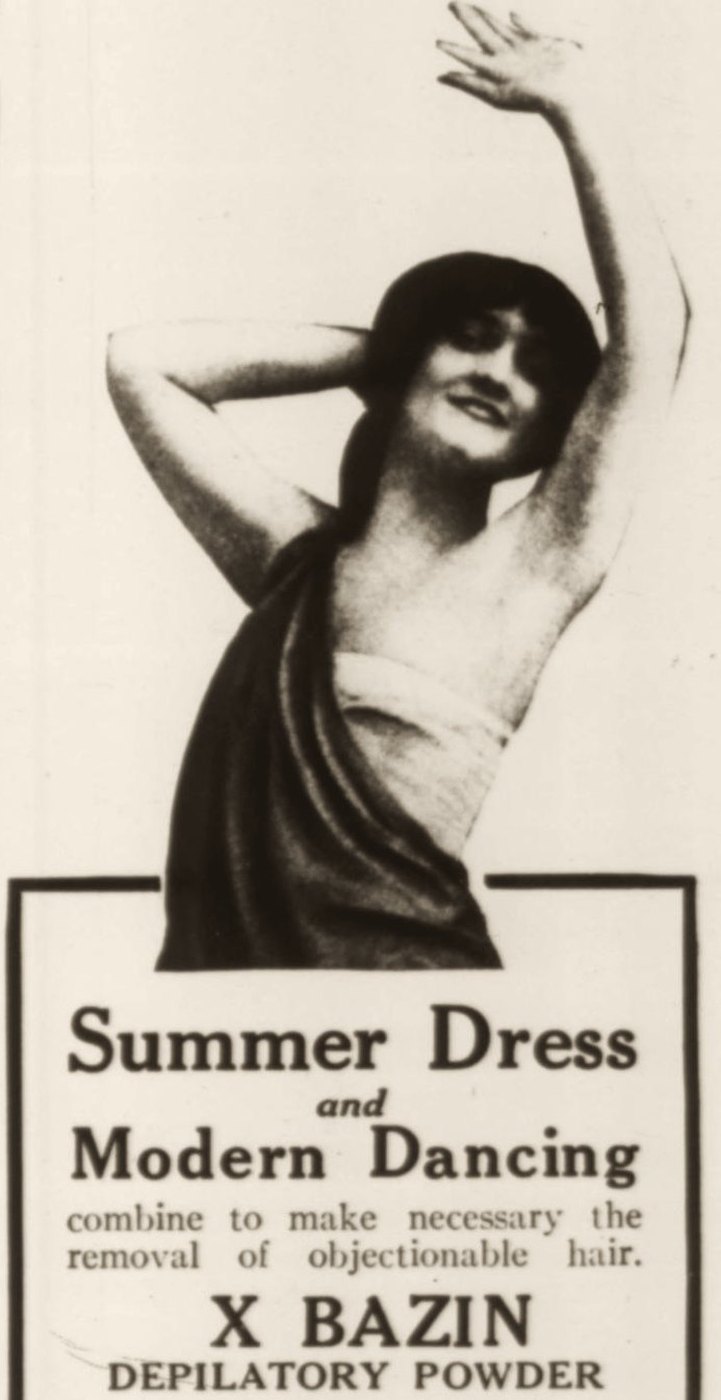
The X Bazin ad in Harper's Bazar, May 1915. Arms raised, shoulders bare, and a powder to remove the hair the ad called objectionable.
Later came the word “cellulite,” a name for the ordinary dimpled fat that 80 to 90 percent of adult women have, and creams and treatments followed. From the late 2000s, drug makers ran TV ads asking men whether they had “low T” (low testosterone). Among American men forty and older with private health insurance, testosterone use more than tripled from 2001 to 2011. About half of the men who started it had no diagnosis of low testosterone in the year before. One in four had not even had their level tested.
Sometimes the line itself moves. In 1998, the United States lowered its cutoff for “overweight” to match an international standard.
Tens of millions of Americans became overweight overnight without gaining a pound.
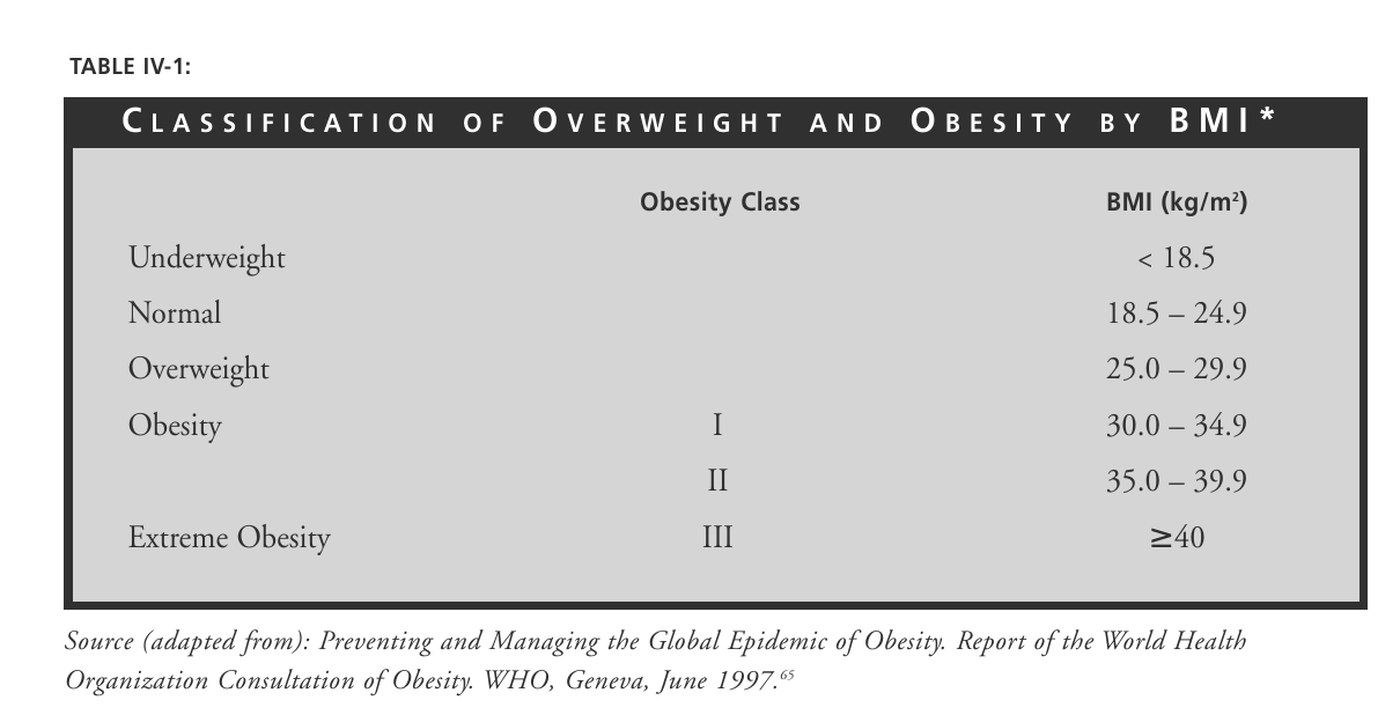
The federal guidelines of 1998. Overweight now started at a body mass index of 25. Before, it started at 27.8 for men and 27.3 for women.
Diet, skincare, fitness, supplements, drugs, surgery. No single company sets the standard. But every one of them needs the same thing.
A population that believes its current body is not enough.
The standard has moved again and again over the past century. Each move was sold as freedom or progress, and each one opened a new market. It also left the people who had built their bodies for the old look standing below the new one.
For women, the ideal kept swinging back to whatever was hardest to get. In the 1950s, being too thin was the problem to fix. A 1955 issue of LIFE magazine carried an ad for Wate-On, a weight-gain tonic, under one word, “Skinny?”, promising “pounds and inches of firm, solid flesh.”
Then the ideal turned. In 1980, researchers in Toronto and Chicago went back through twenty years of Miss America contestants and Playboy centerfolds. Both had grown steadily thinner. Over the same years, young women in the general population had grown heavier, and the diet articles in six popular women's magazines had climbed. The ideal and the real body were moving in opposite directions, and the magazines printed more diets as the two moved apart.
The fashion covers followed. A study of the four most popular American fashion magazines from 1959 to 1999 found the cover models got significantly thinner in the 1980s and 1990s. It found something else too. By the 1990s the covers showed the model's whole body far more often than in the 1960s. The researchers called their paper “No longer just a pretty face.”
Then curves came back, and this time they could be bought outright. The Brazilian butt lift, a surgery that moves fat from other parts of the body into the buttocks, grew fast in the late 2010s and has stayed near its peak since.
Too thin in 1955. Thinner on the covers through the 1980s and 1990s. Now curves, sold by the surgeon. Every turn came with its own products.
For men, something stranger happened. The look kept moving, and it kept spreading.
In 1999, a team of researchers collected the most popular American action figures made over the previous thirty years, measured their waists, chests and biceps, and scaled them up to the height of a real man. The figures had grown much more muscular over time. Many of the newest ones were more muscular than even the largest human bodybuilders.
Those were the toys boys grew up holding.
In the years that followed, hospital stays for eating disorders rose, and they rose fastest among men.
The person who has rebuilt their body to meet three different standards has not failed three times. They have bought the same product three times, each time under a different label.
The standard is approachable but never reachable. Close enough to feel possible. Far enough to keep people spending. Here is why it never settles.
A look carries the most status while it is hard to get. Industries make money by making it easier to get. The diet plan, the home workout, the filler, the medication. Each sale that works makes the look a little more common. And a common look loses the status that made people want it in the first place.
So the products that help people reach the standard are the same products that make it ordinary.
A new, harder look takes its place, and the selling starts again.
A standard people could reach and keep would create a one-time customer. A standard that keeps moving creates a lifetime one.
Much of the pressure comes free. A mother comments on her daughter's weight. Friends notice. A partner says what they like. People watch themselves and each other all day, often without noticing they are doing it. None of it costs the industries a cent.
Even a move away from dieting gets sold. In September 2018, Weight Watchers changed its name to WW, with a new tagline, “Wellness that Works.” In the announcement, Oprah Winfrey said the company's role “goes far beyond a number on the scale.”
The company that sold weight loss took the word weight out of its name.
There is no opt-out, only different market segments.
The most recent shift works differently. In the early 2020s, a new kind of weight-loss drug, first developed for diabetes, entered the picture. In trials, people lost roughly fifteen to twenty percent of their body weight on average, far faster than dieting usually manages. For people who could afford it, the gap could now be narrowed with a prescription.
In March 2023, the same company, calling itself WeightWatchers again, agreed to buy Sequence, an online clinic for weight management, medication included, in a deal valued at $132 million. Its chief executive said there was “a significant opportunity to improve outcomes for those using medications.”
For decades it sold diets. Now it also sold the medication.
More people looked lean, often with a drug they never mentioned. Everyone else was now comparing themselves to results they did not know were medicated.
And the drugs are getting cheaper. As patents end and cheaper copies arrive, thinness is turning into something almost anyone can buy. If the pattern holds, thin will stop setting anyone apart, and the ideal will move to what money cannot buy quickly. Muscle built over years. Skin. The structure of the face. It is already starting. In 2025, surgery that moves a patient's own fat into the face rose 39 percent, American plastic surgeons reported.
The medication did not end the standard. It moved it again.
Some of what these industries sell works. But what keeps people coming back is not the result. It is the feeling of getting closer to a standard that moves before anyone settles into it.
For many buyers, the product was never the cream or the program or the medication. The product was self-hatred sold as self-improvement, status sold as health, belonging sold as discipline. The product was the gap between who they are and who they have been told they should be. Millions have been buying it for most of their lives. Some recognize the mechanism. Most still feel it.
Naming the standard does not undo decades of being shaped by it.
How much of what feels like personal taste was sold first?
A note on how to read the archive →